
A useful campsite lighting setup gives each area its own job: gentle light inside the tent, practical light over the table and portable light for moving around. Start with where people need to see, then choose the lantern, mounting position and brightness setting for each task.
For outdoor retailers, importers and private-label brands, this is also a clearer way to build a camping-light range. Customers can understand a tent light or a shared-table light more easily than a long list of specifications without context.
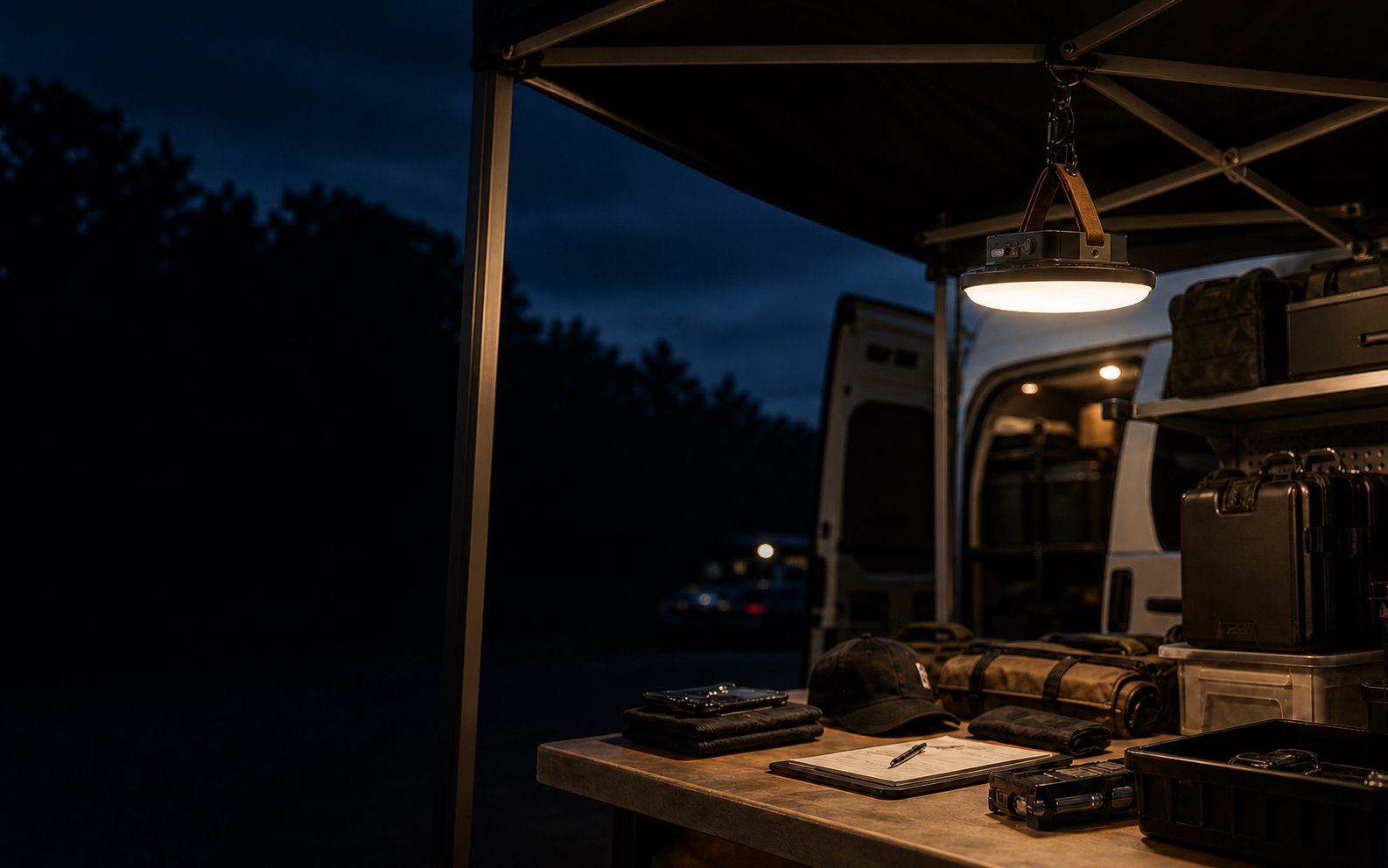
1. Plan four useful lighting zones
Inside the tent: easy-to-reach, low-level light
Prioritize an accessible switch and a stable mounting point. Test whether a low setting lets users find clothing and organize bedding without looking straight into a bright emitter. Check the tent maker’s guidance before suspending anything from an internal loop; a loop intended for a small accessory may not suit a heavier area light.
A compact lantern can be worth evaluating here. Compare the size and handling of BAIFEI B01 with the rest of the range, rather than automatically choosing the largest model for every position.
Cooking and dining: light the work surface
At a preparation table, place the light so that a person’s body does not block it from the surface. Move the lantern during the sample test: a side position, overhead position and tabletop position can produce noticeably different shadows. Keep the lamp, straps and charging leads away from burners and hot cookware.
For a dining table, check the view from each chair. A good place to illuminate food may be an uncomfortable place for someone sitting opposite the lamp. Mounting and brightness adjustment matter together.
Tent entrance and short paths: portable light on demand
Plan how someone will find shoes, steps and guy lines when leaving the table. A separate portable light lets one person move around without taking away everyone else’s illumination. Avoid putting lamps or loose cables where they become trip hazards. Follow the campsite’s lighting and quiet-hour rules.
Shared canopy or gathering area: an area-light candidate
A shared shelter is a sensible place to assess a larger rechargeable lantern such as BAIFEI B06. Evaluate it at the intended hanging height and at several settings. A bigger light should solve a coverage need, not simply stay at maximum output throughout the evening.
2. Choose the position before the brightness
DarkSky International and the Illuminating Engineering Society recommend purposeful outdoor lighting that is directed where needed, kept to the necessary level and switched off when unnecessary. Applied to a campsite, that means checking spill toward neighboring pitches before increasing output. Read the responsible outdoor-lighting principles. These are general planning principles, not a product certification.
Use three simple checks:
- Seated view: can everyone use the space without staring directly into the light?
- Task view: is the actual tabletop or storage area visible, including the parts in shadow?
- Outside view: does the lamp shine into the next tent or beyond the area being used?
Do not wrap a bright lantern in fabric to improvise a diffuser. Select an appropriate diffuser design, adjust the setting or reposition the lamp according to its instructions.
3. An example evening lighting plan
Consider a two-person tent and one shared table. This is a planning example, not a tested coverage claim for a particular product.
- Arrival: use portable task lighting while locating equipment and setting up the shelter.
- Food preparation: position the shared lantern to illuminate the work surface; keep a second light available for someone leaving the table.
- After dinner: reduce the shared light to a comfortable setting and choose a warmer mode if available and preferred.
- Bedtime: turn off unneeded area lighting and keep an accessible tent or personal light ready.
Plan the hours for each setting before comparing battery claims. Our camping-light runtime guide explains why the longest quoted runtime should not be treated as the runtime at maximum brightness. Our warm versus cool white guide helps with the color decision.
4. Turn the setup into a buyer sample test
Ask your supplier for a sample that matches the intended battery, light modes, mount and accessories. Then record the same observations for every candidate:
- Where the lantern was placed and which task it illuminated.
- The selected mode, initial charge and hours of use.
- Switch operation with the lamp hanging and standing.
- Stability, strap clearance and the suitability of the mounting point.
- Visibility from the seats, tent entrance and edge of the pitch.
- Instructions for charging, storage and exposure to rain.
For retail content, photograph the approved configuration in the arrangement customers will actually use. Keep staged application images separate from measured performance results. For packaging, explain the intended use and controls rather than promising that one lamp covers every campsite.
Common campsite-lighting questions
How many camping lights do I need?
Count simultaneous tasks rather than people alone. If someone must leave the table while others continue using it, a separate portable light is useful. A tent, a table and movement around the pitch may require different positions, even when the same lantern type can serve more than one job.
Is a higher-lumen lantern always better?
No. Evaluate the light at the intended distance and position. Extra output does not fix blocked light, an unsuitable mounting point or an emitter that shines into seated users’ eyes.
Which BAIFEI model should I start with?
Start with the B-Series camping-light range, shortlist by size and intended task, then compare samples. Read the B01, B02, B05 and B06 comparison before choosing a retail assortment.