
IPX4 and IPX5 camping-lantern ratings describe different water-ingress protection tests: IPX4 covers splashing water, while IPX5 covers water jets under specified conditions. Neither rating on its own establishes protection for immersion. For a buyer, the useful question is whether the rating and instructions match the exact lantern and intended use.
That distinction matters for outdoor brands and importers. A photograph of a wet lamp, the word “waterproof” or a certificate for a similar-looking enclosure is not enough to define what the product can withstand.
1. Read the two positions separately
An IP code uses separate positions for protection against solid-object ingress and water ingress. An X means that a protection level is not specified in that position; it should not be read as a dustproof claim. The meaning of the positions and the separate water-test categories are explained by Chinese testing organization CVC (Vkan Certification & Testing).
In China, CQC identifies GB/T 4208-2017, Degrees of protection provided by enclosure (IP code), as the basis of its electronic-equipment enclosure-protection certification scheme. That is useful standards context, not evidence that an individual camping lantern holds a CQC certificate. Read CQC’s scheme notice.
2. IPX4, IPX5 and IP65: the practical difference
| Marking | What it describes | Do not assume |
|---|---|---|
| IPX4 | Protection against splashing water from any direction under the test conditions. | Immersion protection or a stated dust rating. |
| IPX5 | Protection against water jets under the test conditions. | Underwater use, pressure-washer cleaning or a stated dust rating. |
| IP65 | Dust-tight classification plus water-jet protection. | Immersion protection merely because the number looks larger. |
IP65 and IPX5 share the water-protection numeral 5; the difference is the stated solid-ingress classification. Immersion is addressed by different water-test categories, such as 7 and 8, with their own conditions. Definitions are summarized in Annex A10 of the Abu Dhabi Department of Energy’s IP-code guide (PDF). This table explains code meanings; it does not certify a BAIFEI model.
Do not convert a rating into a promise of unlimited hours in heavy rain. Exposure, orientation, product condition and the manufacturer’s instructions still matter. A domestic shower or hose demonstration is also not a substitute for the specified laboratory procedure.
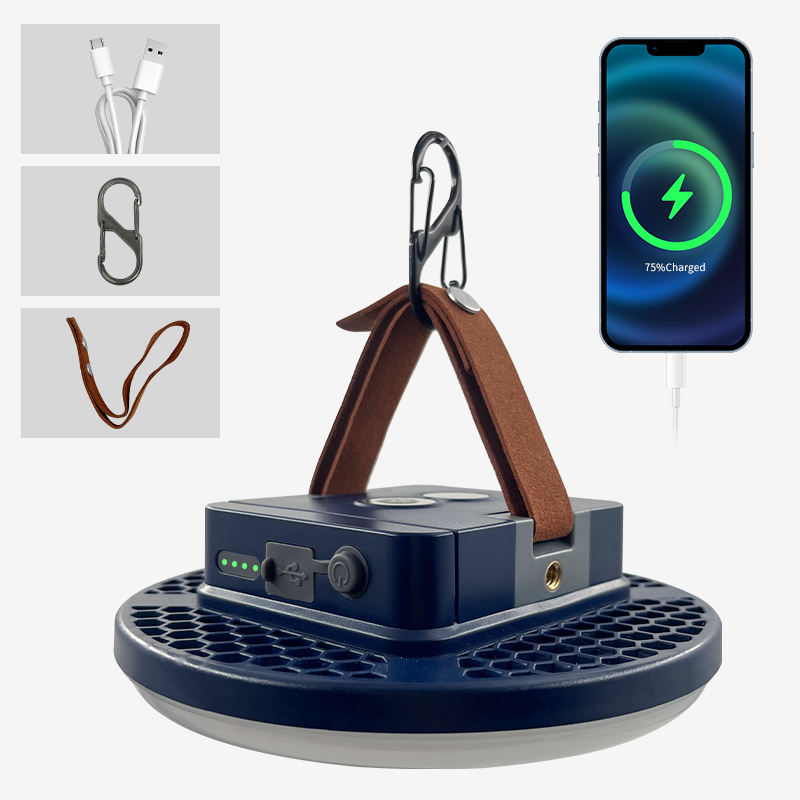
3. Check the charging-port configuration
On rechargeable camping lights, a useful inspection starts with the areas a customer touches regularly: port covers, controls, seams and accessories. Ask whether the reported rating applies with a cover fully closed, with a cable connected or in some other tested configuration. Do not assume those configurations are equivalent.
- Before use: check that covers sit correctly and that visible seals or closures are not damaged.
- When charging: follow the manual and use a dry, protected location; a lamp’s enclosure rating does not automatically apply to its charger or an exposed connection.
- After exposure: follow the drying and inspection instructions before charging or storing the lamp.
- After damage: do not rely on the original rating for an enclosure with a cracked housing or a missing cover.
For a private-label order, include clear cover-closing and charging illustrations in the manual. A simple instruction that customers can follow is more useful than an oversized “all-weather” slogan.
4. Ask for evidence tied to the product you will receive
Build a short verification checklist before approving a carton claim:
- Model identity: does the report identify the model and relevant enclosure configuration?
- Test scope: which IP classification and standard edition are recorded?
- Sample condition: what cover position, cable state, mounting orientation and other conditions were used?
- Result and issuer: can you review the result, report number, date and issuing laboratory?
- Production match: do the approved sample and production design use the relevant housing and closure arrangement?
- Customer instructions: do the manual, product listing and carton describe the same use limits?
Keep the information organized by model rather than placing unrelated documents under a broad “certified products” heading. Use BAIFEI’s file center to start a document discussion, and specify your destination market and required configuration.
5. Describe water resistance without overpromising
The current B06 product page describes an IPX5-rated design. For a wholesale or OEM order, request the applicable supporting information and confirm the final configuration before copying a claim to your own packaging.
A clear listing identifies the applicable rating and points customers to the relevant use instructions. Avoid turning it into “safe underwater,” “works in every storm” or a promise that charging is protected in the rain. Keep drop resistance, corrosion resistance and water ingress as separate questions; one rating should not be used as shorthand for all durability.
For the rest of a supplier brief, see our private-label sample and packaging checklist. For practical placement away from unnecessary exposure, read the campsite lighting setup guide.
Frequently asked questions
Can I immerse an IPX5 camping lantern?
Not on the basis of IPX5 alone. Its water-jet classification is not an immersion rating. Follow the exact product instructions rather than testing immersion yourself.
Is IP65 more water resistant than IPX5?
Both use water-protection numeral 5. IP65 additionally specifies dust-tight protection; IPX5 does not state a solid-ingress level in that position.
Can I charge a water-resistant lantern outdoors?
Do not assume the rating covers charging with a port open. Check the manual and keep charging equipment and connections in the dry conditions required by their instructions.