To compare rechargeable camping light runtime, start with the brightness you actually need, then check how long the light maintains useful illumination at that setting. Battery capacity and the longest advertised runtime cannot answer that question on their own. For buyers considering the BAIFEI B06, the practical next step is to connect its published specifications to a sample check that represents the intended campsite, stall or backup-lighting use.
What the B06 runtime specification tells a buyer
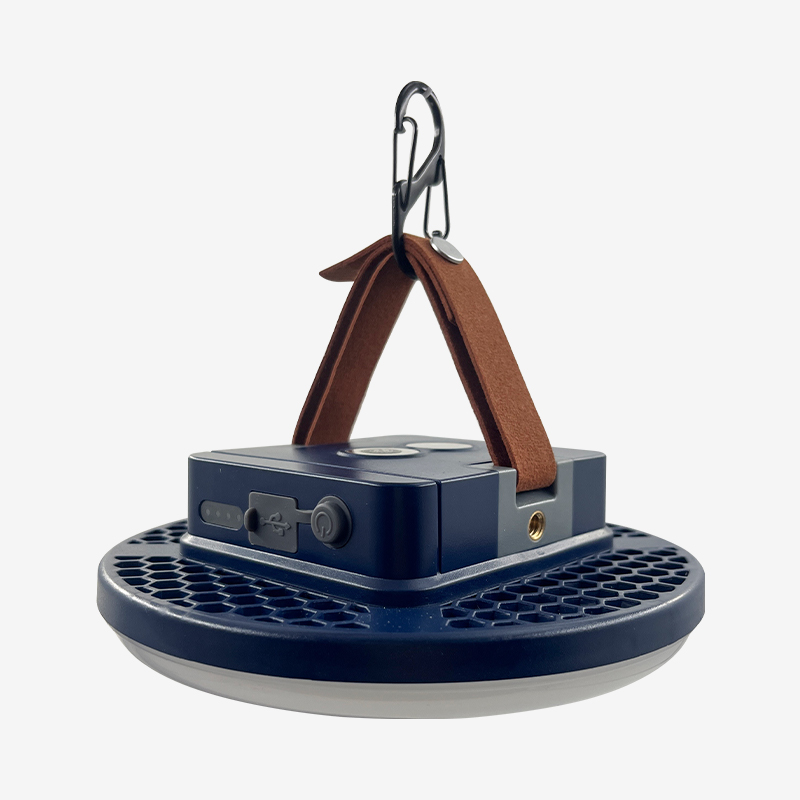
The B06 rechargeable camping light product page lists nominal output of 2,000 lumens, a 13,500 mAh battery and runtime references of 12 / 20 / 40 hours. It also lists USB-C charging and white, warm, natural and SOS/red modes. These are reference specifications for the published model. The approved sample and written order specification determine the configuration supplied.
| Published item | What it helps you assess | What to confirm before ordering |
|---|---|---|
| 2,000 lm nominal output | The model’s published light-output position | Which setting and measurement conditions the value describes |
| 13,500 mAh battery | The stated battery-capacity reference | Battery configuration, nominal voltage and available supporting data |
| 12 / 20 / 40 h runtime references | Different operating-level references | Exact setting, output over time, test conditions and end point for each value |
| USB-C charging | The charging connection | Required input, supplied cable, compatible power source and charge time |
Do not combine “2,000 lumens” and “40 hours” into a promise of 40 hours at 2,000 lumens. The public reference values do not establish that relationship. A quotation or sample report should state which output and operating setting belong to each runtime figure.
Compare useful light, not just the largest battery number
A larger capacity figure can be relevant, but runtime also depends on how the light is operated. Comparing one unit at a low setting with another at its brightest setting does not tell you which meets the same buyer requirement for longer. Likewise, a light that remains on may no longer provide enough illumination for the task.
Define the use first. Reading in a tent, lighting a serving counter and illuminating a shared campsite involve different distances, positions and comfort requirements. Record the mounting position and working area, and assess glare as well as whether objects remain easy to see. These observations make a sample comparison more useful than a maximum-runtime headline.
When comparing different battery platforms, request nominal voltage or an energy figure as well as mAh. Capacity numbers alone do not establish that two batteries store the same amount of energy. For model selection across BAIFEI’s range, use the B06, B01, B02 and B05 comparison guide to shortlist products, then evaluate those samples under a shared procedure.
Use a repeatable sample check for your application
- Identify the exact sample. Record the model, sample identifier, supplied accessories and the configuration being evaluated. Keep any later sample with a changed battery or control setting separate.
- Prepare it consistently. Charge according to the supplied instructions. Record the cable, power source, charge-complete indication and ambient conditions. Follow the product’s use instructions during the check.
- Fix the setup. Use the same position, distance, light mode and brightness setting each time. Photograph the arrangement and note any changes in surrounding light.
- Agree what counts as usable. Describe the minimum task requirement before beginning. If your buyer or test provider uses an illumination threshold, record the measuring position, instrument and agreed threshold.
- Record changes over time. At agreed intervals, note elapsed time, the reading or observation, setting changes and any output reduction. A photograph is useful context, but camera auto-exposure can hide changes; do not treat it as a calibrated light measurement.
- Separate end points. Record when the output first stops meeting the task requirement and when the light switches off. Those can be different times and answer different questions.
This is a proposed purchasing check, not a claim that BAIFEI has already completed that test for your configuration. Where an order requires a formal standard or laboratory report, agree the method and evidence with the supplier and qualified test provider before sample approval.
Keep one runtime worksheet with the sample record
| Record | Buyer entry | Why it matters |
|---|---|---|
| Application and required operating period | For example, a defined evening trading shift | Connects the check to an actual requirement |
| Model, sample ID and battery configuration | Use the sample label and confirmed specification | Identifies what was evaluated |
| Mode, setting, distance and mounting | Record the setup and retain a photo | Makes comparisons repeatable |
| Minimum useful output | Record the agreed task criterion or measurement threshold | Defines the relevant runtime end point |
| Elapsed time and observations | Use a consistent observation interval | Shows output changes before switch-off |
| Recharge arrangement | Record power source, cable and observed charging period | Checks readiness for the next use |
Use the results to choose a model and plan charging
If a sample meets the required operating period only at a setting that is too dim for the application, its longer runtime does not solve that application. Review another setting, a different model or a different lighting arrangement. If it meets the lighting need, check that the charging routine also fits the buyer’s operating schedule.
For mobile vendors, the time available between shifts is a separate purchasing requirement. For a retail range, the relevant output may instead be a clear explanation of modes and charging on the product page and manual. For backup use, include readiness checks and storage guidance from the supplied instructions in the buyer’s operating plan.
Review the rechargeable area-light range for application choices. If the product will carry your brand, transfer the approved settings and claims into the B06 private-label order checklist so the sample, label, manual and sales copy describe the same configuration.
Questions buyers ask about camping light runtime
Does a 13,500 mAh battery guarantee 40 hours of use?
No. The B06 page publishes multiple runtime references. The selected mode, brightness, configuration and evaluation conditions need to be connected to the required operating period before making that claim.
Can I use the longest runtime in my retail listing?
Use a runtime claim only with its relevant setting and supporting information. Ask for the applicable specification or test evidence and make the condition clear to the customer. Avoid presenting a lower-output maximum as full-brightness runtime.
Does USB-C tell me how quickly the B06 recharges?
No. The connector description does not establish the required input or full charge time. Confirm the selected product’s charging requirements, cable and power source, then record the recharge result for the approved sample.
Request a B06 sample and configuration review
Send your application, required operating hours, installation position, target market and quantity. BAIFEI can review the model specification, sample route and available supporting files with your purchasing brief.
Send your B06 runtime requirements Review the file-request process
Product references: B06 product specifications and B-Series range comparison, consulted 8 September 2026. Published figures are reference data, not measurements generated by this article.